
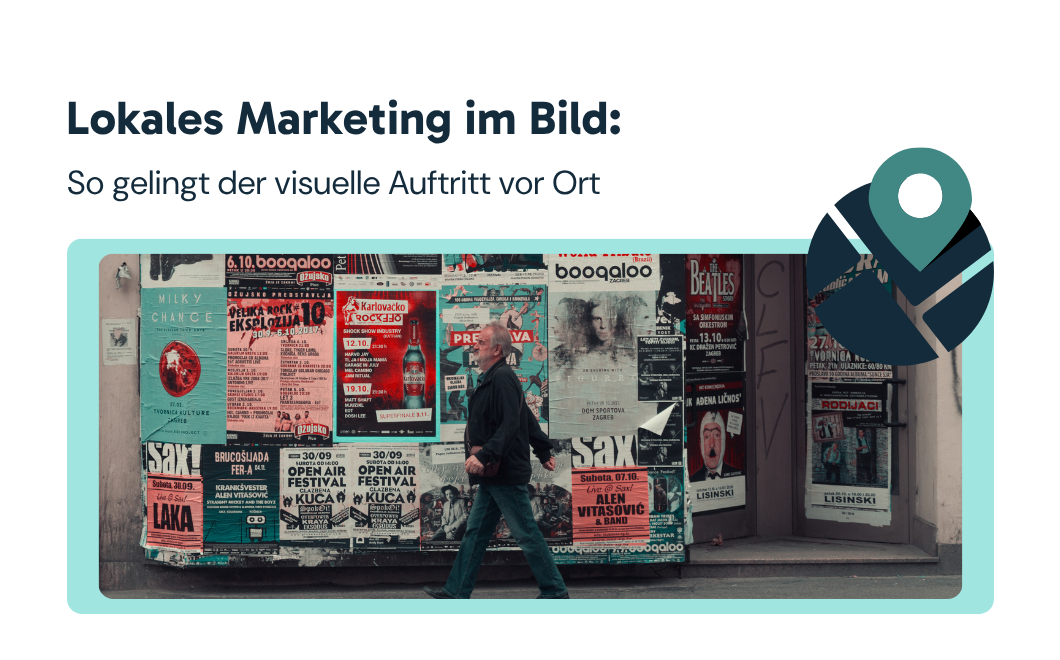
How Brands Create Local Connection Through Visual Communication
From ads in newspaper apps and posters at the bakery to Instagram posts, we are constantly bombarded with information and offers everywhere. The volume of advertising messages we encounter daily is steadily increasing. This leads to ad blindness, especially for increasingly polished ads, and consequently to customers' need for connection and authenticity.
In this environment, it's no longer just about who advertises, but how communication takes place. Images, in particular, play a central role as they are the first point of contact between a brand and its audience. Visual communication thus becomes a crucial tool for gaining attention and building trust, especially when it is authentic and locally rooted.
The Importance of Images in Brand Perception
Images shape the first impression and determine whether a brand is perceived at all. They convey information faster and more lastingly than text, evoke emotions, and create an immediate connection between the viewer and the brand.
Since our brain processes images about 60,000 times faster than text, a single glance is often enough to grasp a message. This creates emotions and moods that enable a deep, non-linguistic connection and are particularly memorable.
Local Connection as a Success Factor for Brands
In a local context, images have a powerful impact. Authentic regional motifs create connection and trust; viewers recognize familiar elements and feel directly addressed. Local partners are excellent storytellers; they know their target audience and can credibly implement visual brand messages in a regionally appropriate way.
Successful local advertising occurs when the central brand message is not simply broadcast, but emotionally transferred into the respective regional and local context. Brands that are visible locally in this way enjoy significantly higher trust and are perceived as more authentic. An example of this are national campaigns supplemented by regional motifs or familiar faces.
The challenge lies in scalability. How can a brand with hundreds of local partners appear authentic simultaneously without generating an uncontrolled proliferation of brand identities?
The Biggest Challenges in Visual Brand Communication
Regional marketing offers proximity and flexibility, but it presents brands with challenges in visual communication. Local partners often have varying skills, resources, or tools for creating and adapting marketing content. This leads to inconsistency in visual language and an imprecise implementation of the corporate identity.
Additionally, there's a time-consuming coordination process for approvals and local adaptations, which burdens the central marketing team. Transparency is often lacking regarding which motifs or campaigns are used by whom and with what success. Without a clear, centrally managed structure, visual brand management quickly becomes inconsistent and inefficient. The brand loses recognition, credibility, and impact.
How Marketing Platforms Optimize Local Visual Communication
With systems like the Local Marketing Platform, visual content can be managed efficiently and centrally. Local individualization doesn't have to suffer, as the marketing headquarters provides its partners with CI-compliant templates, e.g., for social media posts or print ads. This allows texts, locations, or image sections to be personalized without violating brand guidelines.
Automated approvals ease the burden on the marketing headquarters. At the same time, partners benefit from high availability and speed of implementation. They always have access to current campaigns and media. Integrated reporting functions also provide the marketing headquarters with valuable insights into the regional performance of individual visuals, enabling data-driven optimization.
The result: Central control and local individualization go hand in hand. This creates visual brand communication that is both efficient and authentic.
Strategic tips for successful visual brand communication
Develop a central visual concept that allows for local identity. This ensures brand recognition while offering enough flexibility for regional adaptations.
1. Define and consistently implement visual core values
Define which elements should remain consistent. Uniform rules for color palette, imagery, and mood create recognition through a stable brand image.
2. Empower local partners instead of restricting them
User-friendly tools and well-structured templates enable local partners to create marketing materials independently and in compliance with corporate identity. This technological support motivates and establishes a quality standard.
3. Data-driven performance management
Regular evaluations and analyses can gather valuable insights into effective images and motifs in the region. This data allows for targeted campaign improvements and efficient resource allocation.
4. Involve local partners as creative brand ambassadors
Active exchange between headquarters and local branches fosters engagement. When local partners are seen as co-creators, an active brand community with authentic, regional content emerges.
Visual strength emerges in the local context
Visual communication is the key to a strong local brand presence. It determines whether a brand becomes emotionally tangible and builds trust with regional target groups. Local proximity is created when global brand images are not simply reproduced, but specifically adapted to local emotions, people, and the environment.
A marketing management system, such as the Local Marketing Platform, allows for the efficient implementation of this balance between central brand management and local authenticity. This enables brands to present a consistent image while remaining regionally relevant.